
Magnesium L-Threonate for Cognition & Sleep


Want the latest research insights delivered straight to your inbox?
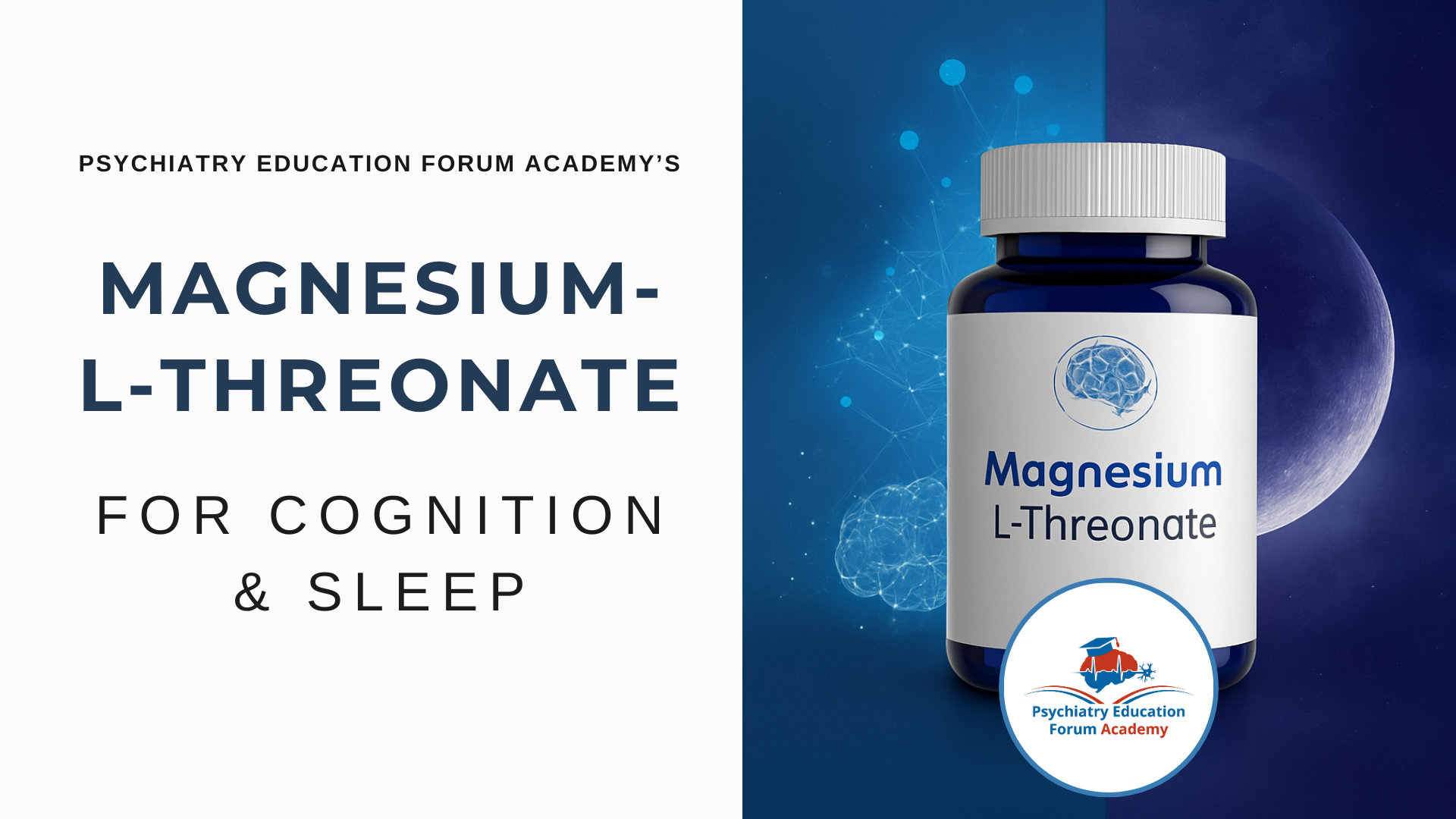
Magnesium plays a central role in neuronal signaling, synaptic plasticity, and sleep regulation. Yet, traditional magnesium supplements may have limited penetration into the brain, potentially restricting cognitive benefits. A newly published randomized, double-blind, placebo-controlled trial evaluated whether magnesium L-threonate (Magtein®)—a formulation designed to increase brain magnesium levels—can improve cognitive performance and sleep quality in healthy adults with self-reported sleep dissatisfaction.
Study Design and Methods
Researchers enrolled healthy adults aged 18–45 years with persistent poor sleep and randomized them to receive either for 6 weeks:
Magnesium L-threonate 2 g/day (≈145 mg elemental magnesium)
Placebo
Outcomes included:
Cognitive testing using the NIH Cognitive Toolbox and reaction-time measures
Sleep and wellbeing questionnaires
Wearable sleep-tracking metrics (heart rate, heart-rate variability, sleep parameters)
Key Findings
1. Cognitive performance improved
Compared with placebo, magnesium L-threonate produced:
Greater overall cognitive improvement on the NIH composite score
Stronger gains in working memory and episodic memory
Faster reaction time
An estimated 7.5-year reduction in cognitive brain age
However, no difference was observed on Raven’s progressive matrices (a reasoning test).
2. Subjective—but not objective—sleep benefits
Participants receiving magnesium L-threonate showed:
Improved sleep-related impairment scores on self-report scales
Greater benefit among those with more severe baseline sleep problems
But:
No significant change in objective sleep metrics from wearable tracking
No consistent differences in restorative sleep or general wellbeing scores
3. Favorable autonomic nervous system effects
Despite minimal objective sleep changes, magnesium L-threonate led to:
Reduced resting heart rate during sleep
Increased heart-rate variability (HRV)—a marker of parasympathetic activity, stress resilience, and autonomic balance
These findings suggest potential physiological relaxation and stress-regulation effects during sleep.
4. Safety and tolerability
The supplement was well tolerated, with no significant adverse reactions reported during the trial.
Clinical Interpretation
Cognition: promising but population-specific
This trial strengthens prior evidence that magnesium L-threonate may enhance memory-related cognitive domains, even in relatively young adults with near-normal baseline cognition. The magnitude of improvement—particularly the estimated reversal in cognitive age—aligns with earlier studies in older adults and mild cognitive impairment.
Clinical takeaway:
Magnesium L-threonate may be most relevant for:
Patients with subjective cognitive complaints
Individuals with sleep-related cognitive fatigue
Aging populations at risk for memory decline
Sleep: subjective relief without measurable architecture change
The divergence between subjective improvement and objective sleep metrics is notable. This pattern is common in sleep research and may reflect:
Ceiling effects in relatively healthy sleepers
Sensitivity of perception-based outcomes to stress reduction or relaxation
Clinical takeaway:
Magnesium L-threonate may function more as a stress-modulating or restorative agent rather than a direct sleep-architecture modifier.
Autonomic regulation: an under-recognized mechanism
The observed HRV increase and heart-rate reduction point toward enhanced parasympathetic tone, linking magnesium supplementation to:
Stress physiology
Cardiovascular regulation
Cognitive resilience
This mechanism may partially explain improvements in memory, reaction time, and perceived sleep quality.
Limitations
Key considerations for clinicians:
Short duration (6 weeks)
Young, healthy sample without psychiatric illness
Reliance on wearable sleep technology rather than polysomnography
These factors limit generalizability to psychiatric or older clinical populations.
Key Clinical Implications
Magnesium L-threonate may improve memory-related cognition and reaction time in adults with poor sleep.
Benefits appear stronger in individuals with greater baseline sleep disturbance.
Physiologic effects on HRV and autonomic balance may underlie perceived improvements.
Objective sleep architecture may remain unchanged, highlighting a stress-modulation rather than hypnotic effect.
Expert Commentary (Psychiatry Education Forum Perspective)
For psychiatrists, magnesium L-threonate represents an intriguing neuroplasticity-focused nutraceutical rather than a traditional sedative or stimulant.
Clinically, the most plausible role may be:
Adjunctive cognitive support in depression, ADHD, or aging
Stress-autonomic regulation in anxiety and insomnia
Preventive cognitive health rather than acute symptom relief
However, larger and longer trials—especially in psychiatric populations—are still needed before routine recommendation.
OUR ACADEMY'S NEW COURSE ANNOUNCEMENT
Magnesium in Clinical Psychiatry
— The Clinician’s Masterclass
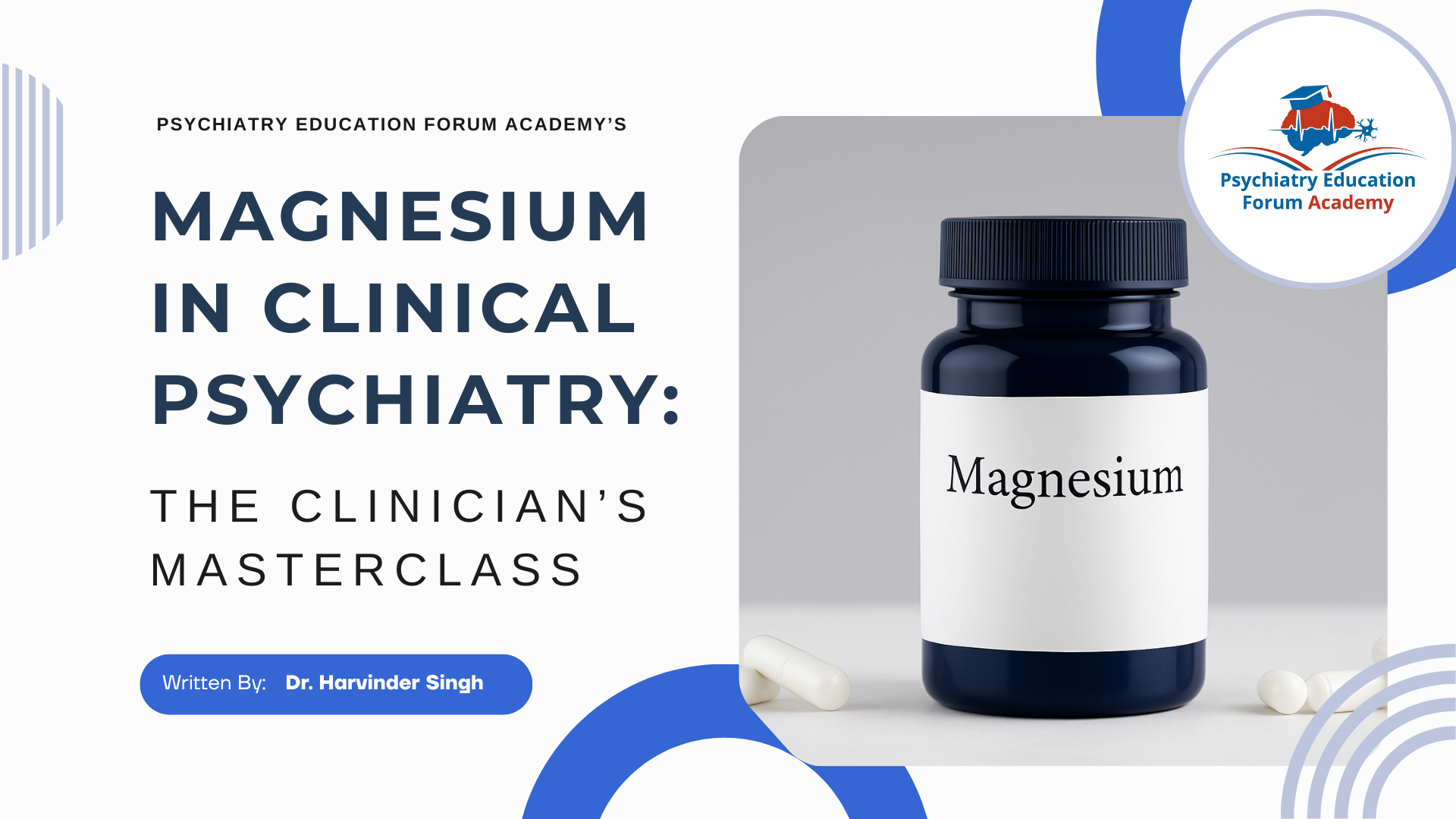
Master the evidence-based application of magnesium therapy to improve patient outcomes in depression, anxiety, ADHD, insomnia and neuroprotection.
What You Will Learn?
- Master the “Neurobiology of Calm”: Understand how magnesium acts as a “pleiotropic neuromodulator” to maintain the delicate balance between neuronal excitation and inhibition.
- Navigate the “Serum Paradox”: Discover why standard “normal” serum magnesium tests often fail to rule out systemic and brain-level deficiency and how to correctly interpret results.
- Utilize Advanced Diagnostic Tools: Implement a tiered laboratory approach for intracellular status and using specific scale for rapid clinical assessment.
- Implement the “Natural Ketamine” Protocol for Depression: Apply evidence-based dosing strategies that have shown statistically significant improvements in depressive symptoms.
- Anxiety and Panic Subtype Matching: Master the science of matching specific ligands to clinical subtypes.
- Break the “Stress-Excretion” Loop: Learn the physiology behind how chronic stress causes the kidneys to “leak” magnesium and how to use basal and “rescue” dosing to stabilize the HPA axis.
- Optimize Sleep Architecture: Use magnesium to enhance GABAergic tone and melatonin synthesis, reducing sleep latency without the side effects of pharmaceutical sedatives.
- Target ADHD and Cognition: Explain the unique ability of a magnesium formulation to utilize specialized transporters to cross the blood-brain barrier, effectively increasing synaptic density and BDNF expression.
- Reverse “Cognitive Brain Age”: Apply the latest January 2026 clinical data to improve memory, processing speed, and synaptic density.
- Formulate “Precision Ligand” Protocols: Master the science of matching specific magnesium forms to distinct psychiatric subtypes.
- Audit the “Magnesium Thieves”: Identify common medications that deplete magnesium and learn how to adjust protocols to compensate.
- Safely Manage High-Dose Therapy: Confidently navigate the “Laxative Threshold” and identify critical clinical contraindications to ensure patient safety.
We continue to review and summarize clinically relevant research to support your daily practice.
INTERESTED IN ACCESS TO THIS & OTHER CLINICALLY RELEVANT LECTURE SERIES?
JOIN ACADEMY MEMBERSHIP:

This is a closed membership for medical professionals only.
- 400+ Clinically Relevant Chapters: Each chapter within these sections is of direct clinical relevance for your daily practice. (Table of Content)
- Journal Club: we will post the most recently published psychiatry articles relevant to your daily clinical practice. (Read Content)
- Clinical Case Discussion: Dr. Singh (Psychiatry) and Dr. Kaur (Family Medicine) discuss clinical cases to integrate the clinical cases from Psychiatry and Medicine. (Read Content)
- Psychiatry Insights: Gain access to Insights featuring the latest on recent publications, new medication approvals, FDA updates, and more.
- Discussion Forum & Community: Connect with other medical professionals and discuss your difficult-to-treat clinical cases. (Academy Network)
- Goal: is to have all important clinically relevant topics in one place for ease of access.
JOIN ACADEMY MEMBERSHIP
DISCOUNTS AVAILABLE FOR: Residents & Students ONLY.
Email us your student information (program information and way to confirm your student status) to: [email protected]
© 2026 All Rights Reserved.




Responses