
Psychiatry Education Forum – February 2026 Highlights



February 2026: What Busy Clinicians Shouldn’t Miss
February 2026 was an exciting month at Psychiatry Education Forum, with major updates spanning ADHD pharmacotherapy, cognitive neuroscience, complex psychopathology, and a newly FDA-approved antipsychotic.
If you’re a busy psychiatrist, resident, nurse practitioner, physician assistant, or pharmacist — here’s your concise, clinically focused recap.
1️⃣ FDA Approval: Bysanti for Schizophrenia & Bipolar I Disorder
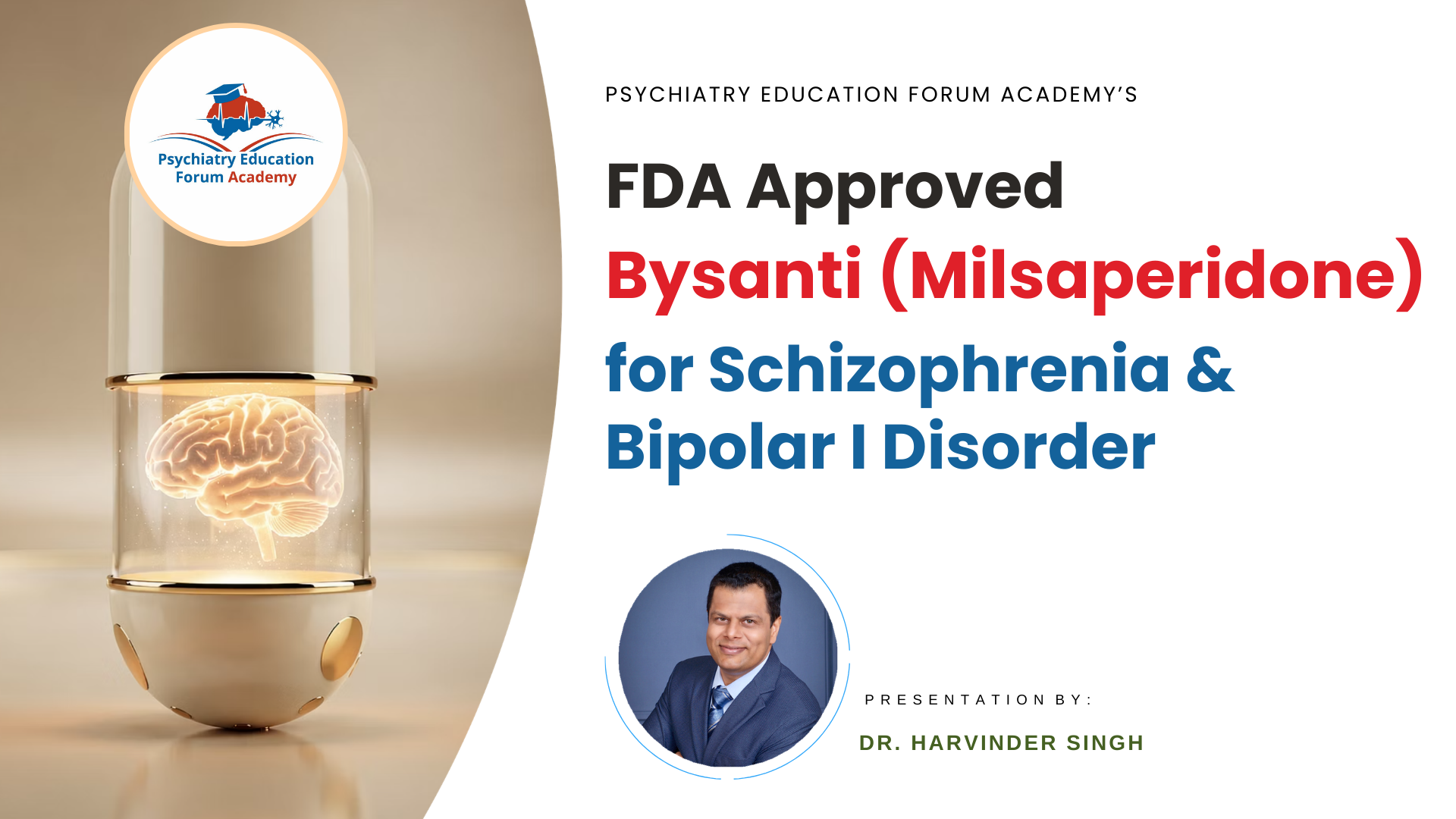
On February 20, 2026, the psychiatric landscape saw an addition with the FDA approval of Bysanti (milsaperidone). Watch the 30-minute deep dive youtube video, where Dr. Singh has summarized this medication in the following sections:
- 🔬 The regulatory pathway (bioequivalence strategy explained)
- 🧠 Mechanism of action and dual-active metabolite system
- 📊 Receptor binding comparison vs risperidone, olanzapine, quetiapine & aripiprazole
- ⚖️ Alpha-1 adrenergic dominance — clinical implications
- 📉 Minimal H1 & M1 activity (metabolic and anticholinergic profile)
- 💊 Dosing considerations and titration pearls
- ⚠️ Orthostasis, QT prolongation & safety considerations
- 📍 Where Bysanti may fit in real-world practice
Bysanti (Milsaperidone) for Schizophrenia and Bipolar I
2️⃣ Magnesium L-Threonate: Cognition & Sleep — What Does the Evidence Show?
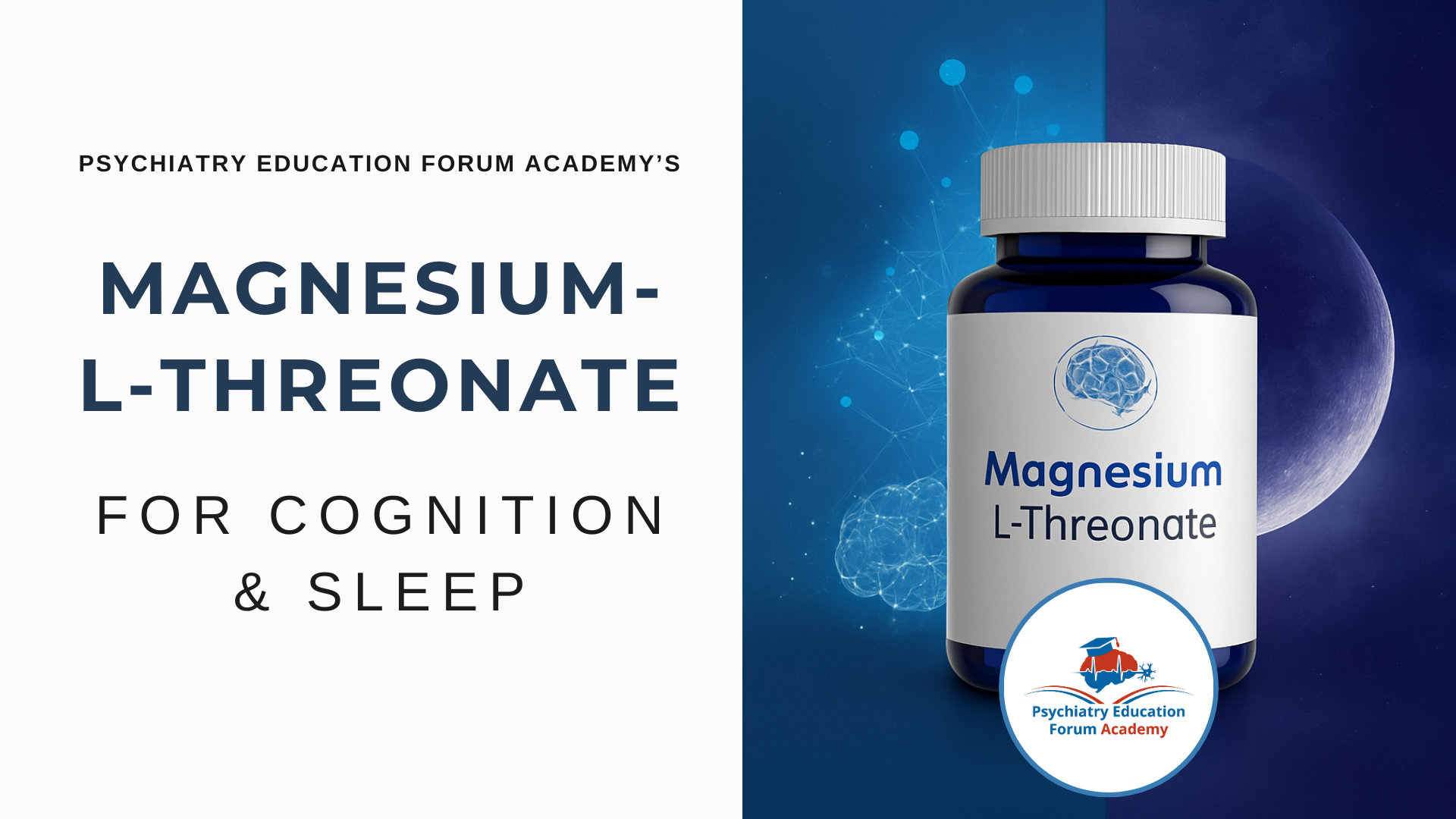
Magnesium plays a central role in neuronal signaling, synaptic plasticity, and sleep regulation. Yet, traditional magnesium supplements may have limited penetration into the brain, potentially restricting cognitive benefits.
A newly published randomized, double-blind, placebo-controlled trial evaluated whether magnesium L-threonate (Magtein®)—a formulation designed to increase brain magnesium levels—can improve cognitive performance and sleep quality in healthy adults with self-reported sleep dissatisfaction.
🔬 Key Findings from the Trial
Improved working memory and processing speed
Better subjective sleep quality
Increased heart rate variability (suggesting improved autonomic balance)
No significant changes in objective sleep architecture
Magnesium L-Threonate for Cognition & Sleep
3️⃣ New Course Launch — Magnesium in Clinical Psychiatry
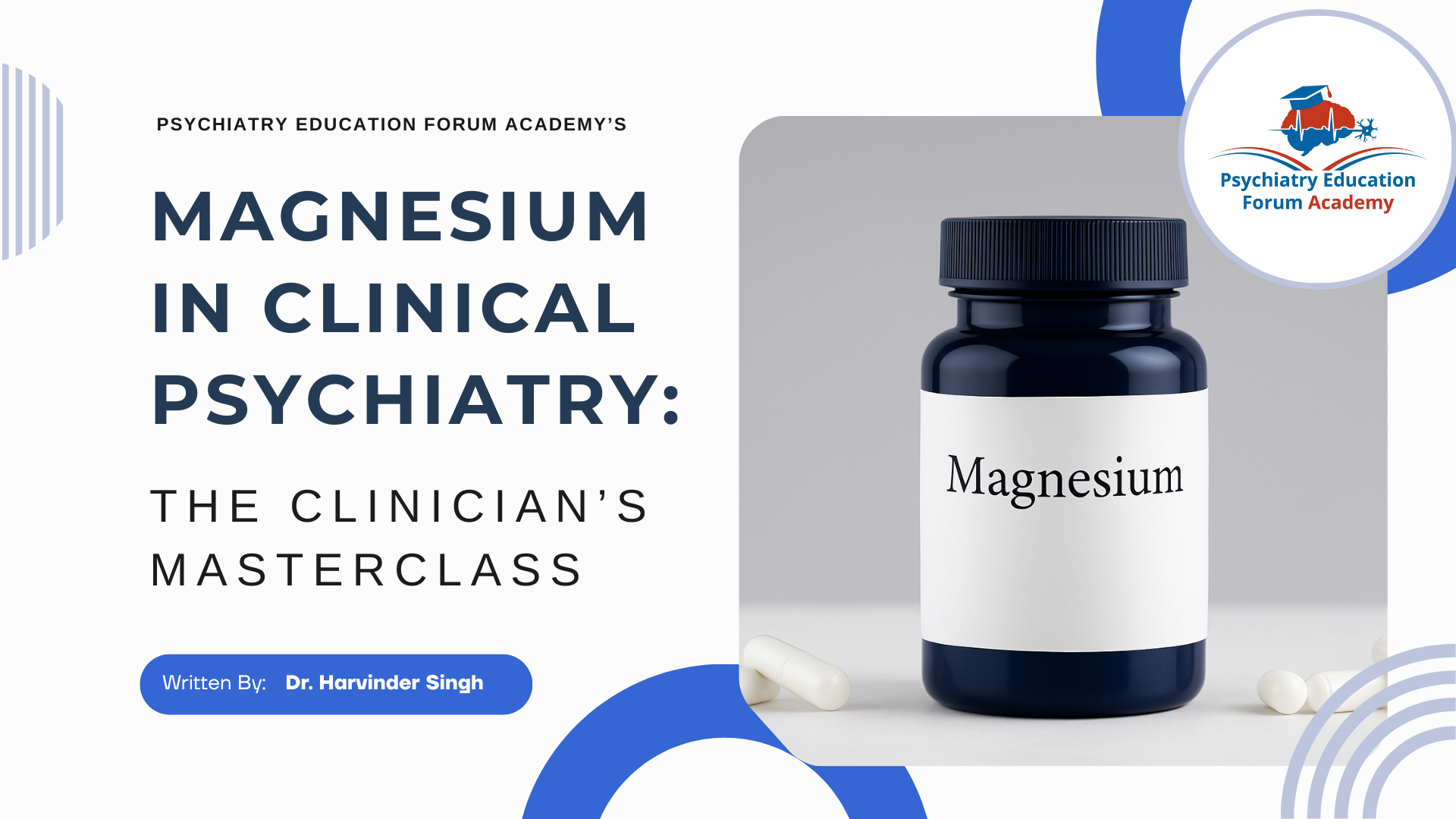
This February we also released a brand-new course designed for clinicians who want to deepen their understanding of magnesium’s role in mental health.
🧠 What You Will Learn?
- The Neurobiology of Magnesium (The Master Regulator)
- Screening and Diagnostic Protocols
- Major Depressive Disorder (The “Natural Ketamine” Hypothesis)
- Anxiety and Panic Disorders (The HPA Axis & Stress Loop)
- Insomnia and Sleep Architecture (The GABAergic Gateway)
- Cognition, Memory, and ADHD (The Blood-Brain Barrier Challenge)
- Bipolar Disorder and Psychosis (Intracellular Signaling & Li-Mg Interactions)
- Formulation & Bioavailability (Matching the Ligand to the Symptom)
- Dosing Strategies and Safety (The Laxative Threshold & Renal Safety)
- Therapeutic Grade Sourcing & Brand Selection
Magnesium in Clinical Psychiatry: The Clinician’s Masterclass
4️⃣ Centanafadine: A Potential New Non-Stimulant for ADHD
We reviewed the latest FDA status update on centanafadine, a novel norepinephrine–dopamine–serotonin reuptake inhibitor (NDSRI) currently under FDA review for ADHD.
Why This Matters
Centanafadine represents a potential first-in-class triple reuptake inhibitor for ADHD — targeting NE, DA, and 5-HT simultaneously.
We have summarized this post in the following sections:
- The Big Announcement (January 2026): FDA Acceptance + Priority Review
- What Exactly Is Centanafadine?
- The Evidence Base (What Supported the NDA?)
- What I Previously Highlighted in My 2025 Blog Post (And Why It Still Matters Now)
- Safety & Tolerability: What Clinicians Should Watch
- Where Centanafadine Could Fit in Clinical Practice (If Approved)
- Bottom Line for Busy Clinicians
Centanafadine Just Moved One Step Closer to FDA Approval for ADHD: What Busy Clinicians Should Know
5️⃣ New Clinical Case Posted: The Weight of Delusional Guilt
[For Academy Members]

We posted our 7th Clinical Case for Academy members:
🧩 “The Weight of Delusional Guilt”
Setting: Outpatient Consultation
Patient: Mr. J, a 52-year-old former accountant.
The Clinical Picture
Mr. J presents with depressed mood, anhedonia, looking disheveled, with marked psychomotor retardation; he speaks in a whisper and takes nearly 10 seconds to respond to simple questions. He is convinced that he has “bankrupted his lineage,” despite his wife providing bank statements showing a healthy 401(k). He views his recent job loss not as a result of his illness, but as “divine justice.”
-
Vitals/Physical: Weight loss of 15 lbs in 2 months. Skin turgor is poor.
-
Safety: Admits to passive suicidal ideation: “It would be better if I weren’t a burden on the world’s resources.”
-
PHQ-9 Score: 21 (Severe).
The “Treatment Failure” Timeline
-
Trial 1: Escitalopram 20mg (10 weeks) — No change.
-
Trial 2: Venlafaxine XR 225mg (8 weeks) — Persistent mood symptoms + emerging psychosis.
-
Trial 3 (Current): Venlafaxine XR 225mg + Risperidone 2mg (6 weeks) — The psychosis is fixed/entrenched; he remains severely depressed.
Medical History: hypertension (controlled on lisinopril 10 mg daily) and hyperlipidemia.
He denies prior manic episodes or substance use.
His family is concerned about his declining function and recent job loss.
What will be your next step in management?
Want the latest research insights delivered straight to your inbox?
We continue to review and summarize clinically relevant research to support your daily practice.
INTERESTED IN ACCESS TO THIS & OTHER CLINICALLY RELEVANT LECTURE SERIES?
JOIN ACADEMY MEMBERSHIP:

This is a closed membership for medical professionals only.
- 500+ Clinically Relevant Chapters: Each chapter within these sections is of direct clinical relevance for your daily practice. (Table of Content)
- Discussion Forum & Community: Connect with other medical professionals and discuss your difficult-to-treat clinical cases. (Academy Network)
- Journal Club: we will post the most recently published psychiatry articles relevant to your daily clinical practice. (Read Content)
- Clinical Case Discussion: Dr. Singh (Psychiatry) and Dr. Kaur (Family Medicine) discuss clinical cases to integrate the clinical cases from Psychiatry and Medicine. (Read Content)
- Goal: is to have all important clinically relevant topics in one place for ease of access.
JOIN ACADEMY MEMBERSHIP
DISCOUNTS AVAILABLE FOR: Residents & Students ONLY.
Email us your student information (program information and way to confirm your student status) to: [email protected]
© 2026 All Rights Reserved.