

Psychotropics in Pulmonary Disease
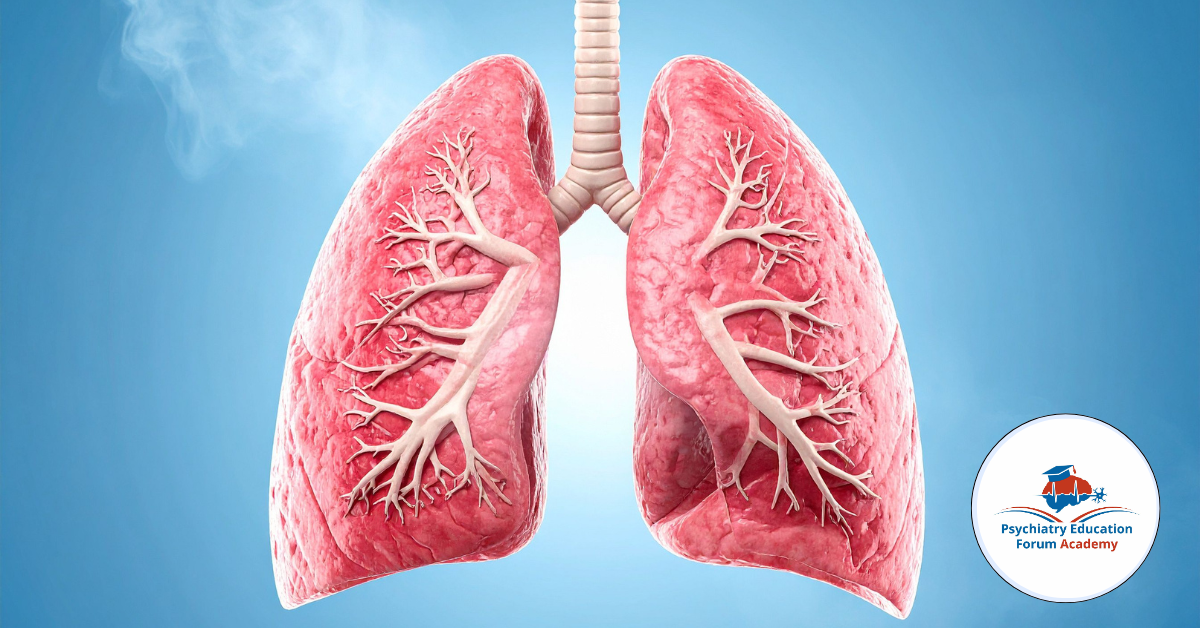
Your patient has no respiratory reserve, or they smoke — and either fact quietly changes what every psychotropic on their list is doing. This course is the point-of-care guide to both.
Prescribing psychotropics in lung disease turns on two questions that the usual references bury. Does this drug depress a respiratory system that has no margin to spare? And is a CYP1A2 substrate’s level about to swing because the patient’s smoking is about to change? Miss either and the consequences are real — an over-sedated retainer, or a clozapine level that climbs into toxicity the week a patient finally quits.
Across fourteen chapters, this guide works through the antidepressants, antipsychotics, mood stabilizers, and anxiolytics against COPD, sleep apnea, the hypercapnic retainer, smoking cessation, and end-of-life breathlessness — every figure verified against primary literature, every honest uncertainty named rather than smoothed over. It is built to be scanned at the bedside, not read like a textbook.
The whole course, in two questions
Start free — two chapters, no membership required
Ch 1 · The Pulmonary Decision Framework
The three questions to ask before any psychotropic decision in a lung patient — reserve, the smoking lever, and the depressant stack — and the two axes the whole course is built on.
Read Chapter 1 →Ch 2 · The Smoking–CYP1A2 Lever
Why starting, stopping, or a forced hospital quit swings clozapine and olanzapine levels — the forced-quit toxicity trap, and why NRT and vaping don’t spare the enzyme.
Read Chapter 2 →Chapters 3–14 are included with Academy membership. The full drug-class decisions, the safety anchors, the myths worth not believing, and the one-page rapid-reference capstone.
Get the complete Pulmonary Rapid Decision Guide
Unlock all fourteen chapters — and every other course in the Psychopharmacology in Medical Conditions series — with a single Academy membership.
Become a Member →Part of the seven-course series — explore the full Rapid Decision Guide →
Responses