FDA Approved First At-Home Brain Stimulation Treatment for MDD: Flow FL-100
Want the latest research insights delivered straight to your inbox?
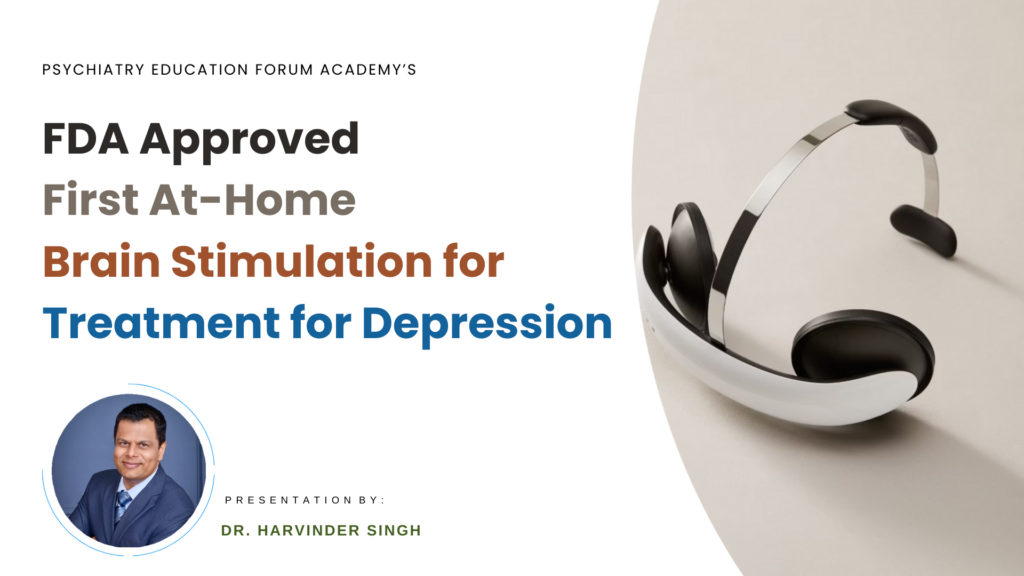
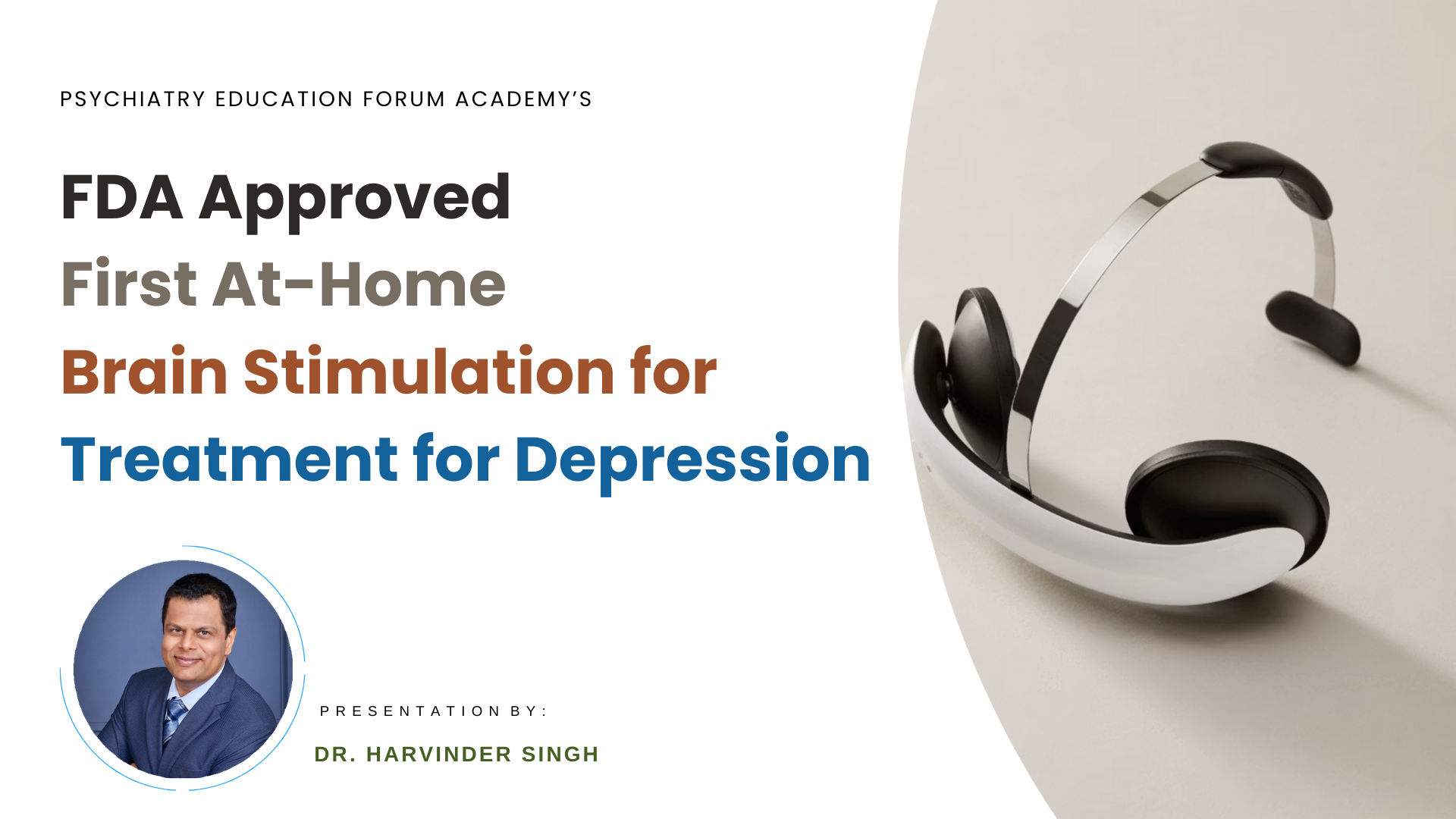
On December 8, 2025, the landscape of depression treatment shifted with the FDA approval of the Flow FL-100—the first at-home transcranial Direct Current Stimulation (tDCS) device for Major Depressive Disorder (MDD). For the first time, we can offer patients a neuromodulation therapy that they can self-administer in their own living rooms.
To help you visualize the device setup and clinical interface, we have prepared a comprehensive YouTube video, where Dr. Harvinder Singh has summarized this topic in the following sections:
- FDA Indication and Approval Overview
- How the Device Works: Mechanism of Action
- How This Differs From TMS
WATCH VIDEO:
Why This FDA Approval Is Clinically Meaningful
This approval is not just about a new device—it represents a structural shift in how neuromodulation may be delivered in psychiatric care.
Historically, brain stimulation for depression has been:
Clinic-based
Resource-intensive
Time-consuming for patients
Limited by geography, insurance, and staffing
An FDA-approved at-home option introduces a fundamentally different model—one that prioritizes accessibility, adherence, and patient autonomy while maintaining regulatory oversight.
Key conceptual shift:
Neuromodulation is no longer confined to specialty centers.
FDA Approval: What Was Actually Approved (and What Was Not)
The Flow FL-100 is an FDA-approved Class IIa medical device indicated for:
Moderate to severe Major Depressive Disorder
Current depressive episode
Adults ≥18 years
Use as monotherapy or adjunctive treatment
Patients not considered refractory to medication
This distinction is critical:
Flow FL-100 is not positioned for treatment-refractory depression in the same category as ECT or advanced TMS protocols.
Clinical Pearl:
This approval targets a large, common outpatient population—patients who are symptomatic, struggling, but not yet refractory.
Neurobiological Rationale: A Deeper Look
The wearable headset employs transcranial direct current stimulation (tDCS) technology, delivering controlled low-intensity (2mA) electrical current through precisely positioned electrodes.
Targeted Brain Region:
- gentle 2mA electric Current flows to the Left dorsolateral prefrontal cortex (DLPFC)
- Left DLPFC: critical neural hub for mood regulation, executive function, and emotional processing that shows hypoactivity in depression.
Mechanism: Neural Modulation
- The electrical stimulation modulates cortical excitability and enhances neuroplasticity, promoting normalization of neural circuits involved in depressive symptomatology without systemic pharmacological effects.
How This Differs From Other Neuromodulation Approaches
| Feature | Flow FL-100 | TMS | ECT |
|---|---|---|---|
| Setting | Home | Clinic | Hospital |
| Anesthesia | No | No | Yes |
| Cognitive side effects | Minimal | Minimal | Common |
| Visit burden | Low | High | High |
| Accessibility | High | Moderate | Low |
Clinical Insight:
This modality is best conceptualized as lower-intensity, higher-access neuromodulation, not as a replacement for TMS or ECT in severe cases.
DEEP DIVE FOR FOR ACADEMY MEMBERS:
Flow FL-100 (tdcs) for mdd
Unlock the full clinical detail by joining the Psychiatry Education Forum Academy:
What This Lecture Covers:
1️⃣ What exactly received FDA approval (and for whom)
2️⃣ Mechanism of action — how this treatment works
3️⃣ Device overview and at-home treatment protocol
4️⃣ Key clinical trial data and efficacy outcomes
5️⃣ Safety profile, adverse effects, and contraindications
6️⃣ Which patients are most likely to benefit
7️⃣ How this compares to medications, TMS, and other options
8️⃣ Practical counseling and real-world clinical considerations
9️⃣ Where this fits in the future of depression treatment
🔟 Key takeaways for busy clinicians
Flow FL-100: FDA-Approved First At-Home Brain Stimulation Treatment
We continue to review and summarize clinically relevant research to support your daily practice.
INTERESTED IN ACCESS TO THIS & OTHER CLINICALLY RELEVANT LECTURE SERIES?
JOIN ACADEMY MEMBERSHIP:
This is a closed membership for medical professionals only.
- 400+ Clinically Relevant Chapters: Each chapter within these sections is of direct clinical relevance for your daily practice. (Table of Content)
- Journal Club: we will post the most recently published psychiatry articles relevant to your daily clinical practice. (Read Content)
- Clinical Case Discussion: Dr. Singh (Psychiatry) and Dr. Kaur (Family Medicine) discuss clinical cases to integrate the clinical cases from Psychiatry and Medicine. (Read Content)
- Monthly Insights: Gain access to our monthly sessions featuring the latest on recent publications, new medication approvals, FDA updates, and more. (Monthly Insights)
- Discussion Forum & Community: Connect with other medical professionals and discuss your difficult-to-treat clinical cases. (Academy Network)
- Goal: is to have all important clinically relevant topics in one place for ease of access.
DISCOUNTS AVAILABLE FOR: Residents & Students ONLY.
Email us your student information (program information and way to confirm your student status) to: [email protected]
© 2026 All Rights Reserved.
Responses